
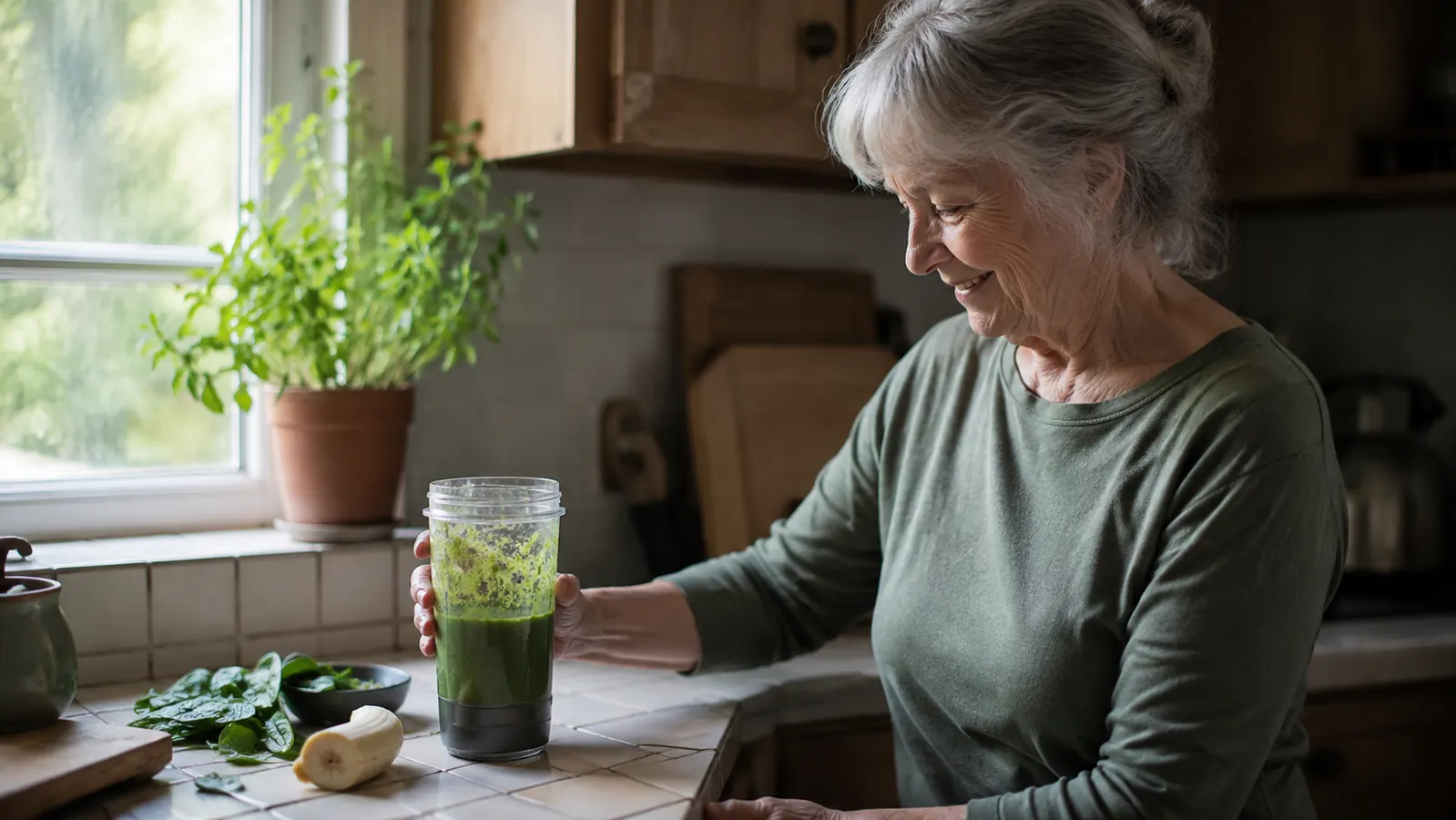
I have about three feet of usable counter in my kitchen, and for years the only blender I owned was a hand-me-down full-size one that took up most of it. Getting it down from the cabinet over the stove was its own small event, and afterward I was looking at a pitcher, a lid, a blade assembly, and a rubber gasket that all needed washing separately. Most mornings I decided a smoothie wasn't worth the trouble and had toast instead. My husband noticed I'd stopped making them and bought me a NutriBullet Personal Blender for my birthday in February, the 600 watt model with the 24 ounce cup. I was skeptical. I have been sold plenty of things that promised to make my life easier and didn't.
It has been six months now, and I use it most days, so I think I owe it an honest accounting rather than a rushed first impression. Not a glowing one and not a sour one, just what has actually happened on my counter since February, blade included, lid included, the works.
The Quick Verdict
Six months of near-daily use later, the NutriBullet earns its spot on my three feet of counter. It is light enough for me to lift with one hand, has only two pieces to wash, and it is still running strong. The motor is louder than I expected and it is not meant for hot soup, but for a daily fruit and vegetable smoothie, it has genuinely replaced the big blender I used to dread pulling out.
Amazon Check Today's Price →Still Wrestling a Full-Size Blender Down From the Cabinet Every Morning?
The NutriBullet Personal Blender is small enough to leave right on the counter, light enough to lift one-handed, and it has exactly two parts to wash instead of five or six. See today's price and current availability on Amazon.
Amazon Check Today's Price on Amazon →How I've Used It
I make a smoothie most mornings, usually spinach or kale, half a banana, a spoonful of ground flax, and whatever frozen berries I have in the freezer. Some days it's just for me, some days I make a second cup for my husband, though he still prefers his coffee to anything green. Weekends I've started using it for other small jobs too, blending a single-serving salad dressing, grinding a handful of oats into flour for a recipe, or pureeing a cup of cooked carrots for soup instead of hauling out the big blender for such a small amount.
The cup itself sits right on my counter next to the coffee maker, which is the first real change from my old routine. The old blender lived in a cabinet because there was no room to leave it out, and anything living in a cabinet doesn't get used as often as it should. This one is small enough that leaving it out doesn't crowd anything, and because it's already sitting there, I actually reach for it instead of talking myself out of it.
I want to be honest that the first week took some adjusting. Twisting the cup onto the base takes a firm quarter turn, and my grip isn't what it used to be, so the first few mornings I had to brace the cup against the counter to get enough leverage. It's gotten easier since, either because I've figured out the right angle or because the gasket has loosened slightly with use. Either way, it's a two-handed job for me, not something I'd call effortless, but it's nothing compared to wrestling a full pitcher of ice onto a base.
Getting Used to the Blade and the Twist-On Lid
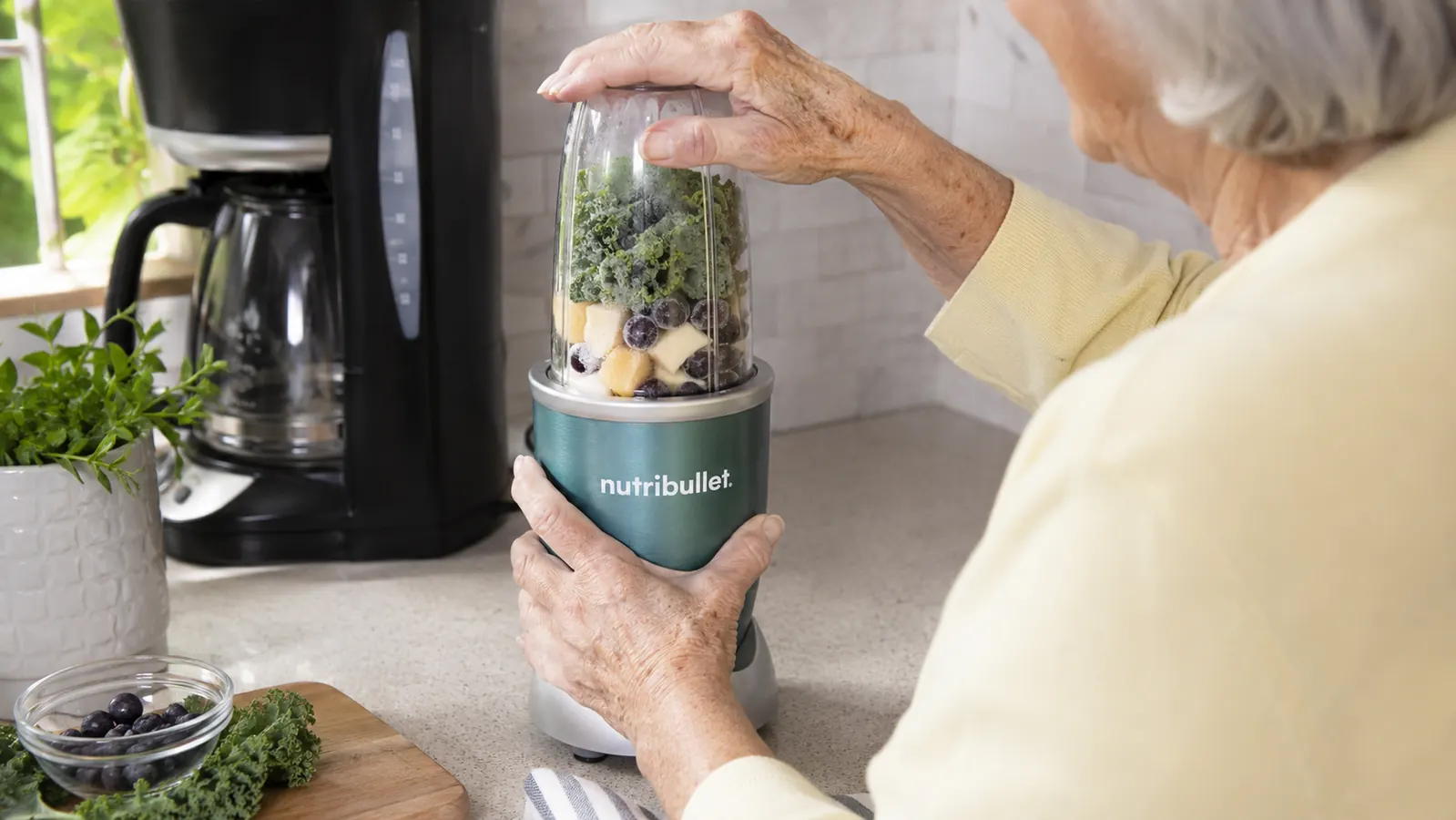
The blade attaches to the cup, not the base, which took me a minute to understand the first time I used it. You fill the cup, screw the blade extractor on top, flip the whole thing upside down onto the motor base, and press down to run it. It felt backward compared to my old blender, where everything sat right side up, but after a few uses it became automatic. There's no separate switch to press. You push the cup straight down onto the base and hold it there, which means my hand is doing double duty as both the on switch and the thing keeping the cup steady.
The blade itself is sharp enough that I'm careful when I rinse it, and I never put my fingers anywhere near the edges when it's off the cup. Once the smoothie is blended, I unscrew the blade piece, screw on the flat sipping lid that came with it, and I've got a cup I can carry to the table or even out to the porch. That part genuinely surprised me. My old blender required pouring the smoothie into a separate glass, which was one more thing to wash. This one, I drink straight from the same cup I blended it in.
The NutriBullet does grind seeds and small ice chunks fine, though I've learned not to overload it with too much frozen fruit at once or the motor bogs down and I have to shake the cup and restart it. That's more a lesson in how I fill it than a flaw in the machine, and it's the kind of thing you learn after a week or two, not something that ruined my mornings.
Six Months of Daily Smoothies: What Held Up
This is the part that matters most to me, because I've bought small appliances before that worked beautifully for a month and then started smelling like burning plastic or lost half their power. Six months in, the NutriBullet still runs the same way it did the first week. Frozen fruit and greens still break down fully, the motor doesn't seem to have lost any strength, and I haven't had a single day where it just wouldn't turn on.
I have noticed the base gets warm to the touch if I run it two or three times back to back, which happens on weekends when I'm making a cup for both my husband and myself plus grinding something for a recipe. I let it rest a few minutes between runs on those days, more out of caution than because the manual told me to. It has never shut itself off or shown any sign of real strain, but I'd rather be gentle with a motor I want to keep for years than push it hard and find out the hard way.
The one physical wear I've noticed is a light scuffing on the inside of the cup from the ice, which is purely cosmetic. It doesn't affect how it blends and it isn't visible unless you're looking for it. The rubber gasket on the blade piece still seals tight, no leaking, even when I've overfilled the cup by accident, which I've done more than once chasing a bigger smoothie than the fill line really allows.
The Noise, the Weight, and My Grip
I'll be plain about this because I know it matters to people my age the way it matters to me. The NutriBullet is loud. Not painfully loud, but loud enough that I don't run it before eight in the morning if my husband's still sleeping, and loud enough that our neighbor once asked through the wall what on earth I was doing. It runs for maybe fifteen to twenty seconds at a time for a normal smoothie, so the noise is over quickly, but it is not a quiet machine and I don't want anyone to buy it expecting whisper-quiet operation.
On weight, this is where it has genuinely earned its keep. The base is light enough that I lift it with one hand to wipe underneath it, something I could never do with my old blender's heavy glass pitcher and motor housing. The full cup, once it's blended and I'm carrying it to the table, weighs about what a full mug of coffee weighs, nothing that strains my wrist or shoulder.
The twist-on step is the one place I'd flag for anyone with weaker hands or arthritis in their fingers. It isn't a light touch, it's a firm quarter turn with some downward pressure behind it, and my grip strength isn't what it was ten years ago. I've adapted by bracing the cup against the counter edge rather than holding it entirely in the air, which solved the problem for me, but I wanted to say it plainly rather than pretend it twists on effortlessly, because it doesn't.
Cleaning It Between Uses
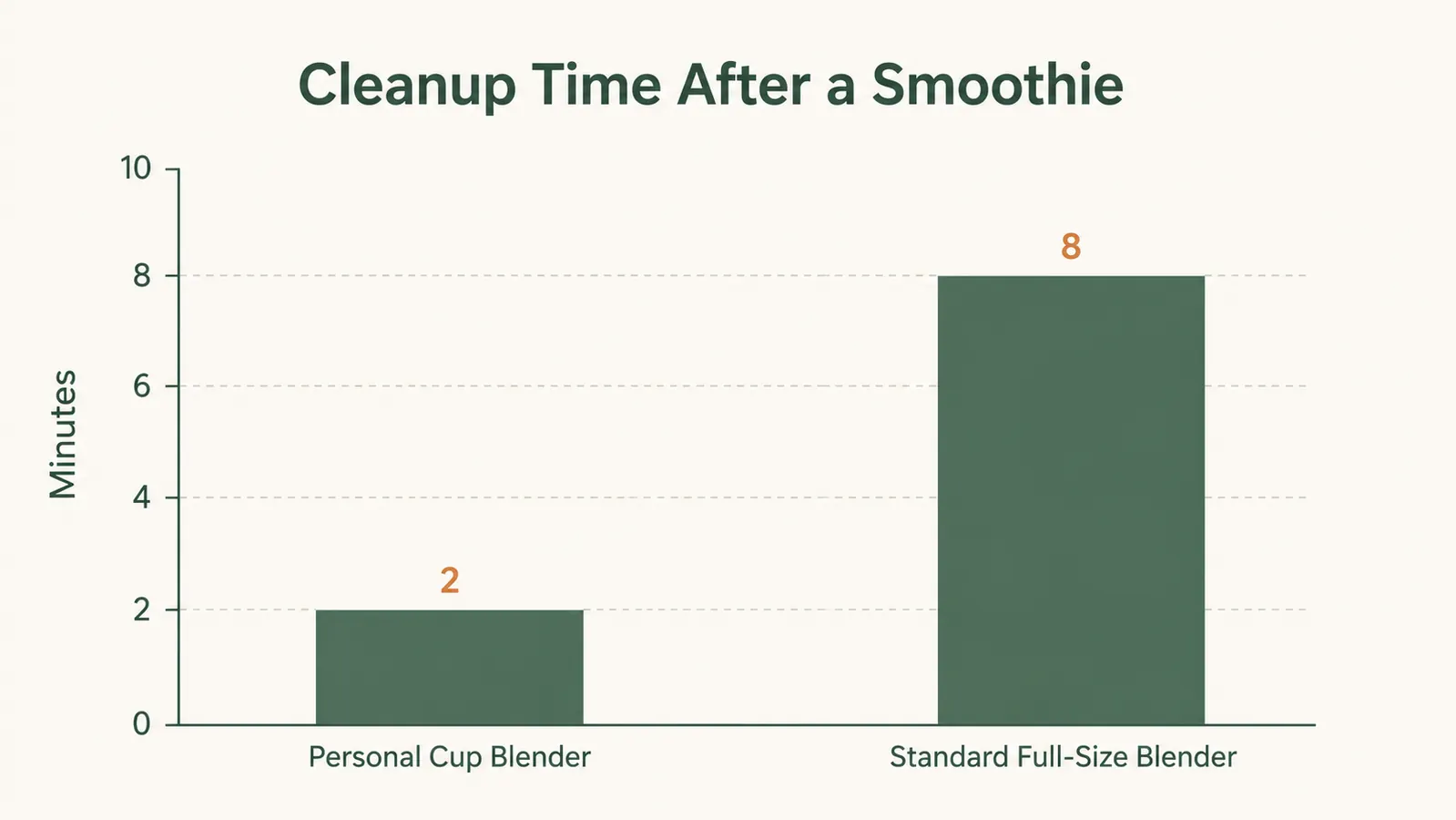
This is honestly my favorite part of owning it. There are two pieces that touch food, the cup and the blade extractor, compared to the five or six pieces my old full-size blender had between the pitcher, the lid, the blade base, and the rubber seals. Most mornings I just rinse both pieces under hot water and set them upside down on a towel, and that's the whole cleanup.
For a deeper clean, maybe once a week, I run a little dish soap and warm water through the cup with the blade attached and pulse it for a few seconds, which scrubs the inside without me having to reach in with a brush. Both pieces are labeled dishwasher safe on the top rack, and I've done that a handful of times when I've had a full dishwasher load going anyway, though I mostly hand wash since it's just two small pieces and takes less time than loading the dishwasher would.
How the Cleaning Routine Changed From Month One to Month Six
In February I babied it. Every single time I finished a smoothie, I'd pull the blade off, rinse it under hot water right away, and set both pieces upside down on a towel before I even sat down to drink. I was worried about buildup the way you worry about anything new, checking the underside of the blade for stray bits of spinach like I was inspecting it for a warranty claim. That habit lasted maybe three weeks before it settled into something more relaxed.
By month three the routine had eased up on its own. I still rinse right after blending, because I learned early that letting a smoothie sit in the cup for even twenty minutes makes the residue harder to get off later, especially anything with banana in it. But I stopped doing the weekly soap-and-pulse deep clean as often as I described above, and now it's more like once every couple weeks, because the daily rinse has genuinely kept up on its own. Six months in, cleanup takes less thought than it did the first month, not more, which is the opposite of how most of my small appliances have gone over the years.
Frozen Fruit, Fresh Fruit, and What Actually Worked in the Cup
I've settled into a short list of combinations that work well, and a couple that taught me something the hard way. Frozen fruit blends better than fresh, plain and simple. Frozen mango chunks or frozen berries break down into a smooth, thick texture in the twenty seconds it usually takes, because the ice crystals help the blade do its work. Fresh, soft fruit like a ripe banana or a soft peach works fine too. But one Sunday I tried fresh, firm pineapple, cut into chunks with the tough core still mixed in because I was in a hurry, and the result was gritty rather than smooth, with little fibrous strings I could feel in every sip. That one taught me to either use frozen pineapple instead or trim the core out completely before it goes anywhere near the cup.
My favorite combination six months in is kale, a small piece of fresh ginger, frozen mango, and enough water to get it moving, which blends smoother than almost anything else I've tried. Compared to my old full-size blender, this one actually handles a single serving of frozen fruit better, because the blade sits closer to a smaller volume of ingredients instead of chasing a big pitcher of ice around a much larger pitcher. If I were buying again, I'd make the same choice without much hesitation. The only thing I might reconsider is asking whether NutriBullet sells this same base with a larger cup, since there are mornings I'd like a slightly bigger smoothie than the 24 ounce cup comfortably allows.

Alternatives I Considered
Before my husband bought this one, I'd looked at a couple of other options myself. I considered just keeping my old full-size blender and being more disciplined about using it, but six months of evidence before this purchase told me that plan wasn't working. I also looked at a similarly sized personal blender from a different brand, and I go through that comparison in more detail in a separate piece I wrote on NutriBullet versus the Magic Bullet blender, if you're trying to decide between the two.
I ruled out a food processor entirely. It does a different job, chopping and shredding rather than fully breaking down frozen fruit and leafy greens into something drinkable, and it would have taken up more counter space than I was willing to give up for something I wasn't going to use every day.
What I Liked
- Light enough for me to lift and carry one-handed, base included
- Only two pieces touch food, so cleanup most days is a quick rinse
- Six months of near-daily use with no drop in motor power that I can tell
- Small enough footprint to leave out on three feet of counter without crowding it
- Drink straight from the same cup you blend in, no extra glass to wash
Where It Falls Short
- Genuinely loud when it's running, not a quiet appliance by any measure
- Twisting the cup onto the base takes real hand strength and grip
- Motor runs warm after two or three uses back to back, so I space them out
- Not built for hot liquids or heavy chopping, it's a smoothie and small-batch tool
It didn't make me a different cook. It just made the smoothie step small enough that I stopped skipping it.
Who This Is For
This is for anyone cooking for one or two people with a small kitchen and no interest in wrestling a heavy full-size blender down from a cabinet every morning. If you want more spinach and frozen fruit in your routine and you've been put off by how much a big blender weighs or how many pieces it has to clean, this has genuinely solved that problem for me. I go through more of the everyday reasons a personal blender fits a whole-food routine in a separate piece if you want the fuller list.
Who Should Skip It
If you need something that purees hot soup, crushes a full pitcher of ice for a crowd, or handles large batches for a big family, this small cup isn't built for that and you'll be frustrated running it over and over to get enough volume. And if your hands or wrists really struggle with any twisting motion, I'd try one in a store first before buying, because that quarter turn onto the base is the one part of using it that isn't effortless.
Ready to Get a Real Smoothie Habit Going Without Fighting a Heavy Blender?
Six months in, this is still the appliance sitting right out on my counter, not tucked away in a cabinet I never open. Check today's price on Amazon and see if it's in stock.
Amazon Check Today's Price on Amazon →