
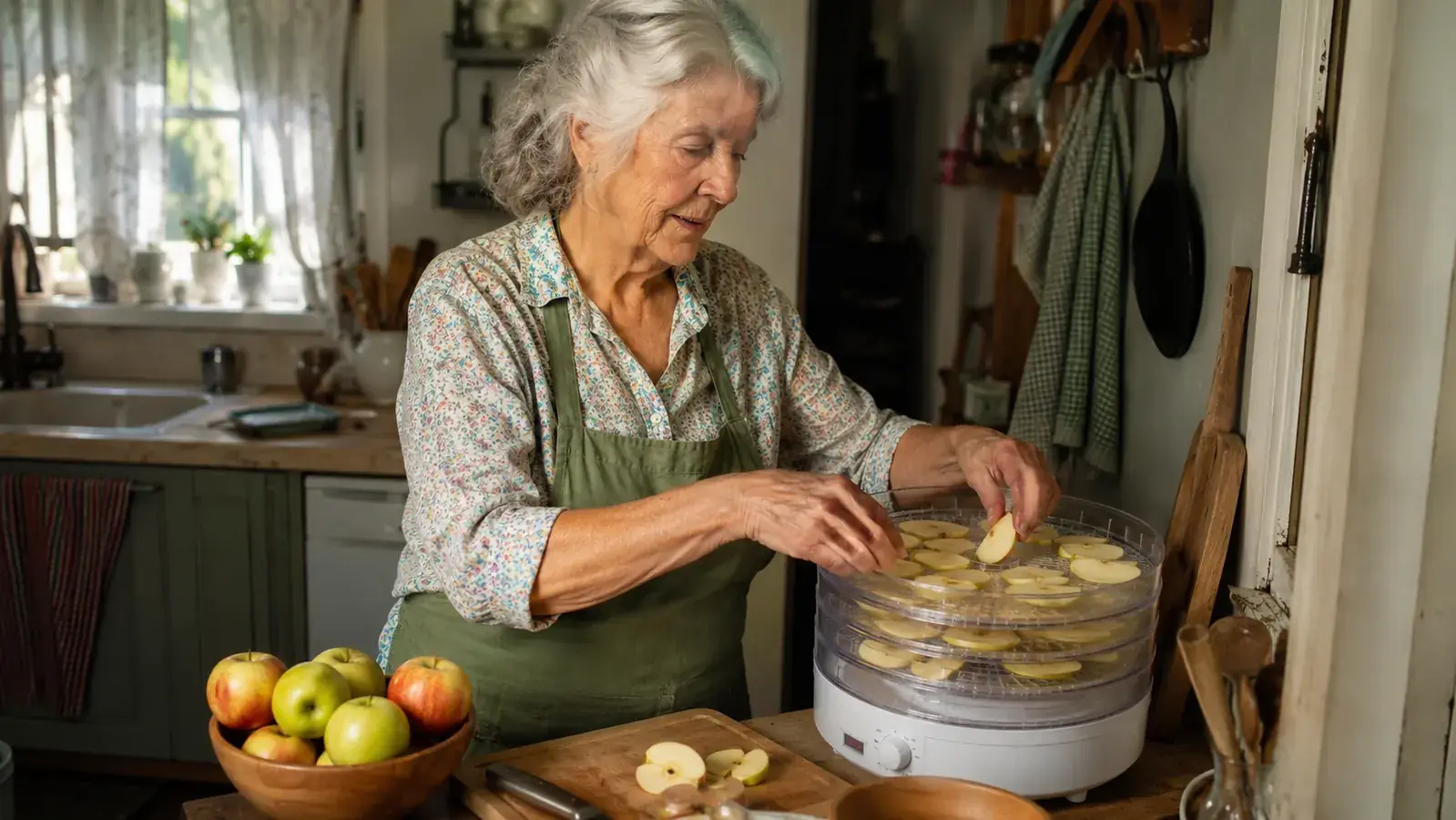
My husband and I keep a modest garden out back, nothing fancy, but by late August we are drowning in more tomatoes, apples, and herbs than the two of us can eat, can, or hand off to the neighbors before it starts to turn. For years my answer was the freezer, until I ran out of freezer space too and kept finding bags of frozen zucchini shoved to the back, freezer burned and forgotten. The Presto Dehydro electric food dehydrator changed that math for me. Instead of racing the clock before a glut of produce goes soft, I slice it, load the trays, and turn a counter's worth of fruit, vegetables, or herbs into something shelf stable that keeps in a jar on the pantry shelf for months, no freezer bag to squeeze air out of, no lid to check for a seal.
I want to be plain about what I am telling you here, because dehydrating gets talked up online like it is some kind of trick. It is not a trick. It is a simple way to pull the water out of whole food so mold and spoilage have nothing to work with, and the result takes up a fraction of the room a freezer or a shelf of canning jars would. What follows are ten specific, practical reasons this particular dehydrator earned a permanent spot on my counter instead of getting used twice a summer and shoved in the closet, the way my old one did.
Tired of Watching a Garden Glut Go Soft Before You Can Use It?
The Presto Dehydro turns a counter full of ripe produce into shelf-stable jars before any of it goes to waste. Check today's price and current availability on Amazon.
Amazon Check Today's Price on Amazon →It rescues a garden or farmstand glut before it turns
Between our own tomato vines and the farm stand down the road selling peaches by the box, late summer used to mean a lot of soft, wasted fruit I could not eat fast enough. Now when I bring home more than we can finish in a few days, it goes on the trays that same afternoon instead of sitting on the counter getting overripe while I decide what to do with it.
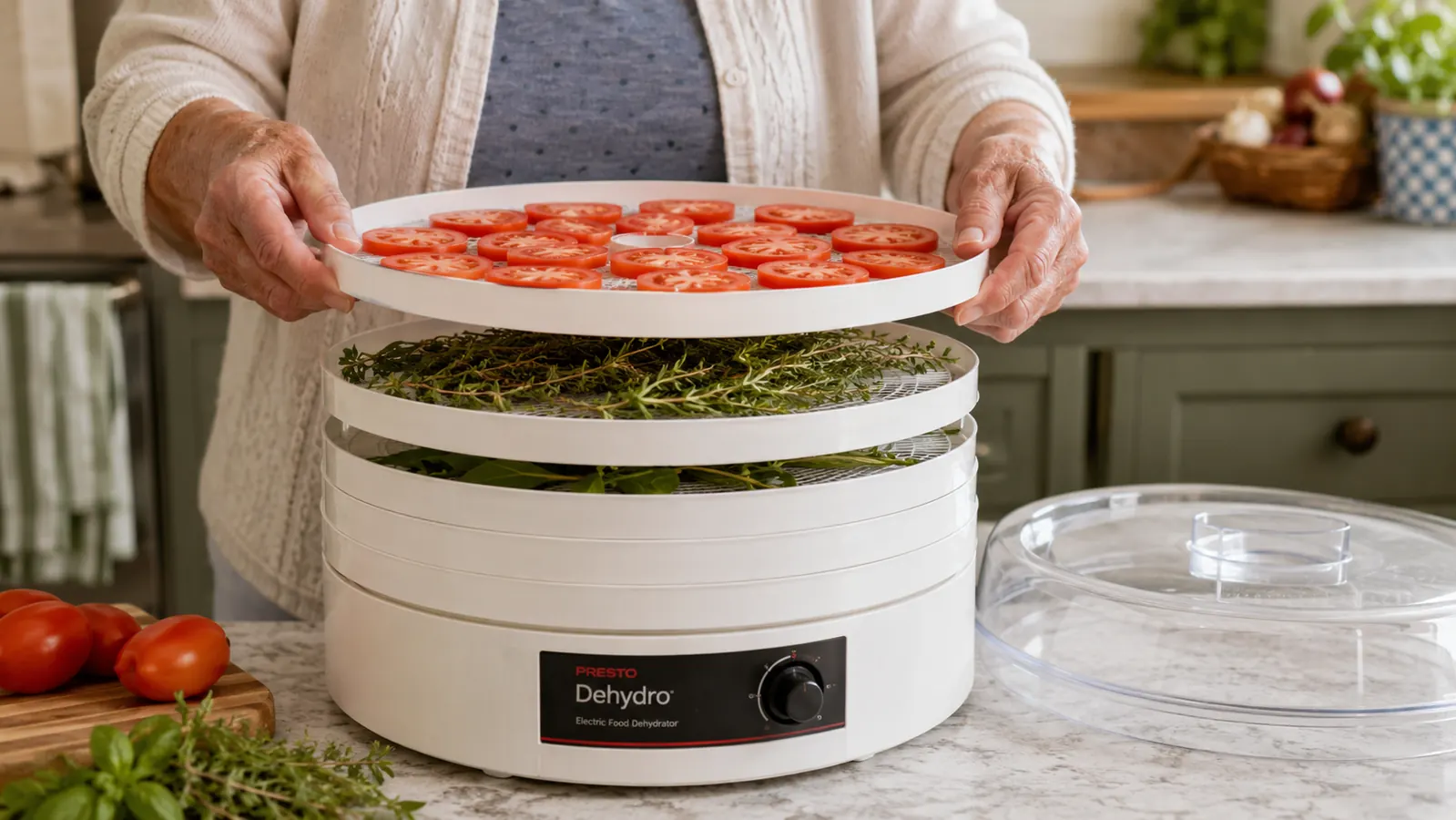
It does not need a single inch of freezer space
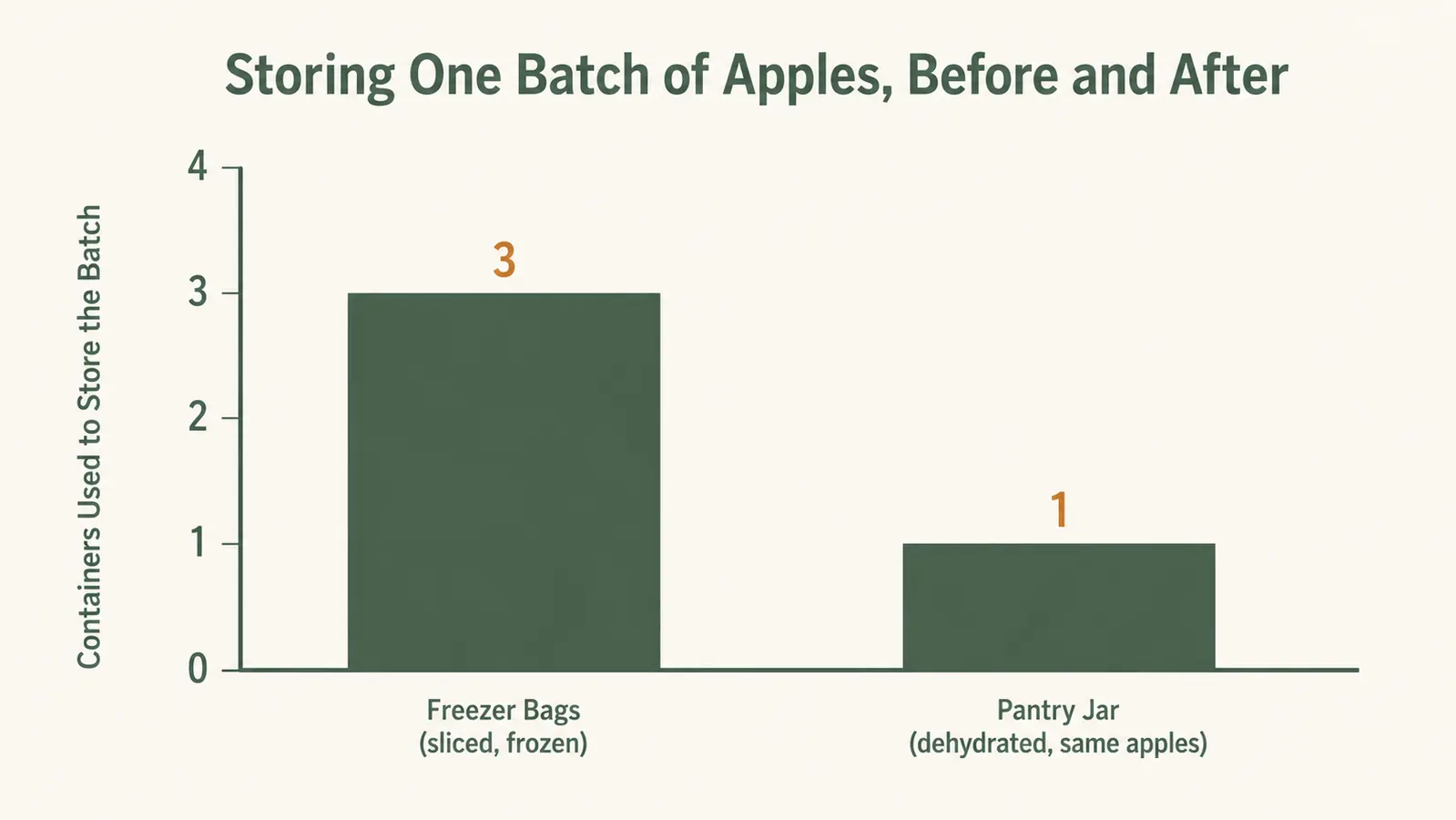
Our freezer is small and already crowded with the basics, so a big batch of frozen fruit or vegetables meant something else had to come out. Dried food goes in a jar on a pantry shelf instead, at room temperature, and I have gotten back an entire freezer drawer I used to give over to bags of frozen produce every August.
A sealed jar on the shelf outlasts fresh produce by months
Fresh tomatoes or apples on my counter are good for a matter of days before I have to use them or lose them. Once they are dried and packed into a jar with a tight lid, kept somewhere cool and dark, they hold on the pantry shelf for months without me thinking about them again, which takes the pressure off having to use everything right away.
I control exactly what goes in the jar
Store-bought dried fruit is often coated in added sugar, or treated with sulfites to keep the color bright, and half the time I cannot pronounce everything on the label. When I dry apples or apricots myself, the ingredient list is one item long. It is just the fruit, sliced, with nothing added and nothing sprayed on it.
It costs less than buying dried fruit at the store
A small bag of dried mango or apricots at the grocery store is not cheap, and it disappears fast in this house. Drying my own from fruit I already bought, or grew, costs me nothing extra beyond the electricity to run the machine for a few hours, and I end up with far more for the same money than a store bag would give me.
Garden herbs stop wilting on the windowsill and actually get used
I used to grow basil, oregano, and mint every summer, and most of it wilted on a windowsill or went into the compost before I got around to using it. Now a full tray of herb leaves dries down to a small jar of crumbled herbs I actually reach for at dinnertime, all winter, instead of buying a jar of something I could have grown myself.
The trays scale down to a small batch for two people
I am not trying to run a canning operation for a family of eight. Some days I only have a bowl of apples or a handful of tomatoes worth drying, and I can load just one or two trays instead of committing to a full canner or a giant batch. That flexibility is what makes it something I use most weeks instead of once a season.

It runs quietly enough to leave going for hours
Drying a full load of fruit or vegetables takes several hours, sometimes closer to a full day for something thick like tomato halves, and I need to be able to leave it running in the kitchen while I go about my afternoon. It hums along quietly enough that it does not bother either of us in the next room, which matters when it is running that long.
Dried fruit is something I can actually chew
My husband has never cared for hard, tough jerky-style dried snacks, and neither have I since my dental work last year. Fruit dried at a gentle setting, checked and pulled off the trays once it is leathery rather than brittle, still has enough give to it that it is easy to chew instead of something we have to work at.
Cleanup is a rinse, not a project
The trays lift off the stack and rinse clean under the tap, or go straight into the dishwasher if they need more than that. There is no scorched pot to soak, no canner to haul out and put away. When cleanup takes five minutes, I actually start another batch the next time the counter fills up with produce instead of putting it off.
What I'd Skip
I would skip this if you are hoping to preserve a whole freezer's worth of vegetables in one afternoon, because a home dehydrator works in small to medium batches over several hours, not a single quick pass. If you want speed above all else, this is not that. I would also say do not expect it to be silent, it has a fan that runs the whole time it is drying, and while it has never bothered either of us, it is not nothing either. And I would skip loading it up and walking away for two days without checking, some fruit and most vegetables need to be pulled once they hit the right texture, or they end up drier and tougher than I like.
The dehydrator does not do anything magical to food. It just takes the water out, and that turns out to be enough to keep a garden glut from ever going to waste again.
If you want the fuller picture after using this dehydrator through two full growing seasons, including what has held up and what surprised me, I wrote it out in my long-term Presto Dehydro review. I also put it side by side with a pricier stainless model in Presto Dehydro versus the Cosori dehydrator if you are still deciding which one to buy.
Ready to Stop Losing a Garden Glut to the Compost Pile?
Two growing seasons in, this is still the appliance that keeps our pantry stocked instead of our freezer overflowing. Check today's price on Amazon and see if it fits your kitchen.
Amazon Check Today's Price on Amazon →