

I'm not going to tell you what homemade yogurt does inside your body. I don't know, and honestly, neither do the people selling yogurt makers, no matter how much gut health language shows up on the box. What I do know, after months of making yogurt at home with my Euro Cuisine yogurt maker, is what actually happens in my kitchen: what goes into the jar, what it costs, what ends up in my trash can, and how it tastes on a Tuesday morning. That's the list I can honestly stand behind, so that's the list I'm giving you here. Ten reasons a home yogurt maker earned a permanent spot on my counter, every one of them about the food and the kitchen, none of them about anything I can't actually observe.
One honest note before the list. The Euro Cuisine listing leans hard on gut health and probiotic language, the way most of them do, and I understand why a company would want to say that. I'm setting all of it aside entirely and sticking to what I've actually watched happen with my own hands over several months of regular batches, jar by jar, grocery trip by grocery trip. If a claim isn't something I can see on my counter, I'm not repeating it here.
Tired of Paying for a Tub That's Mostly Sugar and Thickeners?
A yogurt maker turns plain milk and a spoonful of starter into jars you control completely, no added sugar unless you stir it in yourself. See today's price and current availability on Amazon.
Amazon Check Today's Price on Amazon →You Control Exactly What Goes Into the Jar
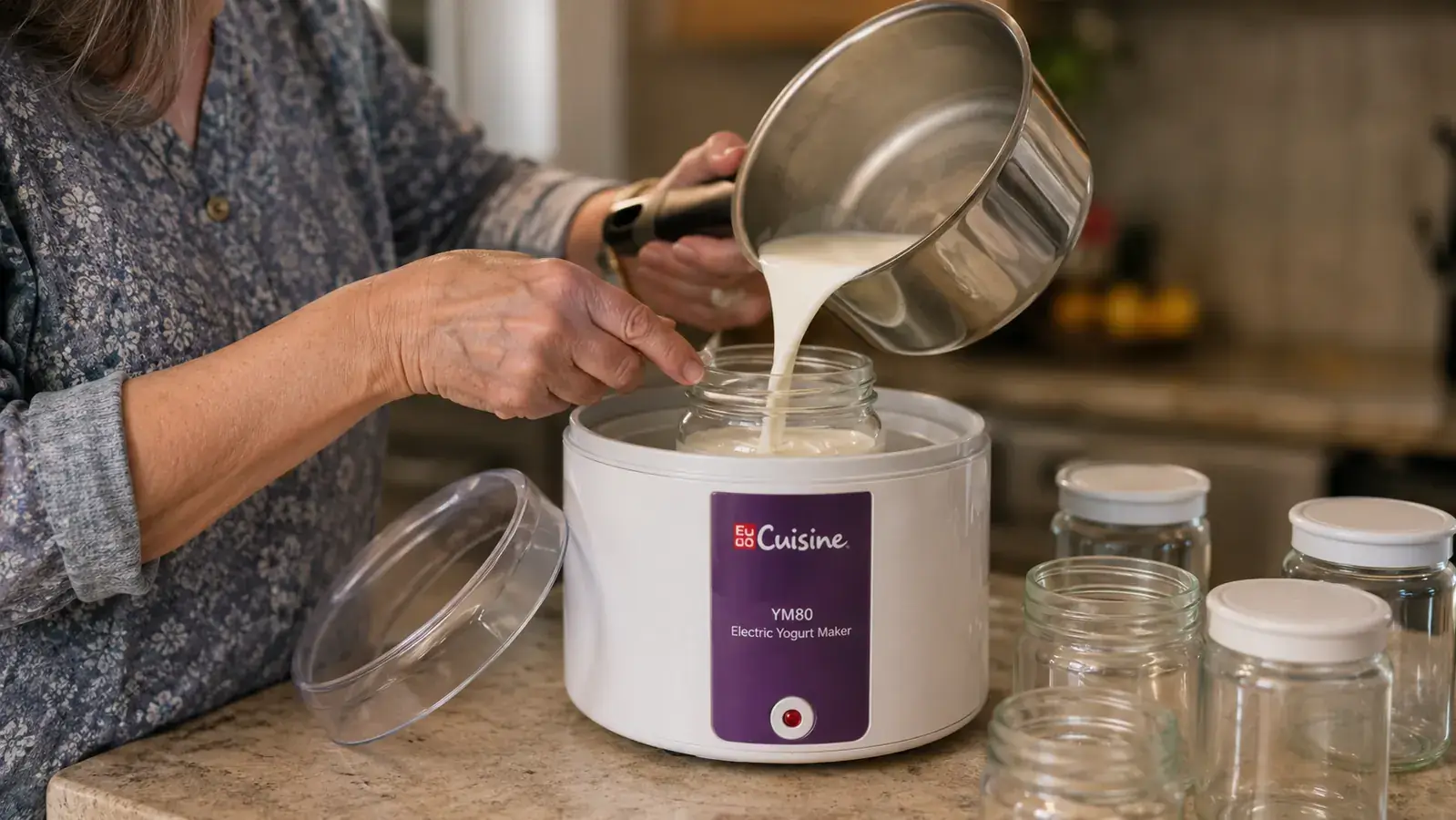
I started reading yogurt tub labels a few years back and didn't love what I found, added sugar in nearly every flavored cup, modified corn starch or gelatin for thickness, and food dye in anything marketed to kids. Making yogurt with a yogurt maker cuts that list down to two ingredients I choose myself: milk and a starter culture. Nothing goes in that I didn't put there, which is the whole reason I bothered learning the routine in the first place, and it's the reason I keep doing it months later instead of drifting back to the store tubs.
It Costs a Fraction of Single-Serve Cups
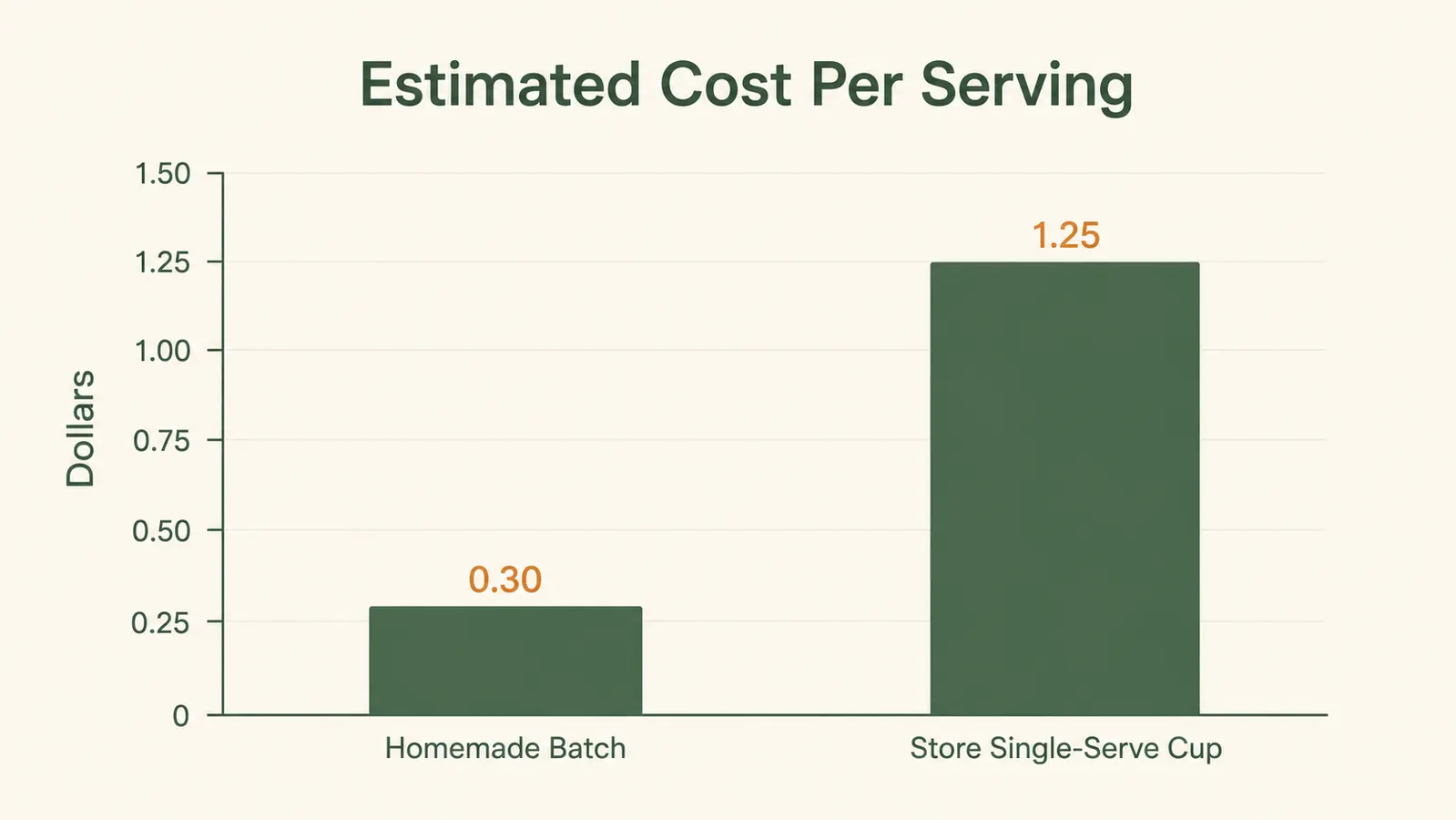
A quart of milk and a small spoonful of starter run me well under a dollar for an entire batch of jars, which works out to pennies a serving once I do the math. A single-serve cup at the store runs over a dollar apiece for the same amount, sometimes closer to a dollar fifty for the ones with real fruit mixed in. Over a month of regular eating, that gap adds up to real grocery money saved, not a rounding error, and it's the reason I've stopped buying yogurt at the store at all.
You Decide How Thick or Thin It Turns Out
Store shelves offer thin, regular, or thick with a Greek-style label slapped on and a higher price to match. A yogurt maker lets me control texture myself by choosing whole milk over two percent for a thicker set, or by letting a batch run a little longer for more tang and body. I don't have to buy three different tubs to find the texture I want that week, I just adjust my own batch.
No Plastic Cups Piling Up in the Trash
Every store yogurt cup I ever finished went straight into the trash or the recycling bin, week after week, cup after cup. My Euro Cuisine jars are glass, and they go back into the machine for the next batch instead of out to the curb. I'm not going to claim this solves anything beyond my own kitchen, but I do notice a lot less plastic leaving my house than there used to be, and that's a real, countable difference.
The Jars Give You Built-In Portion Control
Each jar is already a single serving by the time the batch finishes, so I'm not guessing at a scoop size out of one big tub the way I would with a large container from the store. I grab a jar, eat it, and I'm not left wondering whether I took too much or too little. My husband takes one to work most mornings without either of us measuring anything.
You Can Use Whatever Milk You Already Keep in the Fridge
Whole milk, two percent, even goat milk if that's what's in your refrigerator, a yogurt maker doesn't care. I've made batches with whatever I had on hand rather than driving to a second store because the brand I usually buy was out of the flavor I wanted. That flexibility alone has saved me more than one wasted errand.
It's Nearly Hands-Off Once You Learn the Routine
The actual work takes me about ten minutes, warming the milk, stirring in the starter, and filling the Euro Cuisine jars. After that I set the timer and walk away for eight to ten hours while it does the rest on its own. I usually start a batch after dinner and it's ready when I get up, no standing over a pot, no checking on it every hour, and no fussing with settings once I found the timing that works for my kitchen.

There's Always a Jar Ready in the Fridge
I used to run out of yogurt mid-week more often than I'd like to admit, then put off the store trip until I finally remembered. Now I start a new batch before the current one runs low, so there's rarely a stretch where the fridge is simply empty of it. That small bit of planning has quietly ended a lot of last-minute store trips.
It Gives You a Plain Base for Real Fruit
Flavored cups at the store almost always mean added sugar, sometimes as much as a dessert. My jars come out plain, which means I decide what goes on top, usually sliced strawberries or a spoonful of thawed frozen berries from the freezer. That's real fruit instead of the syrupy fruit-on-the-bottom mix most flavored cups use, and I'm the one deciding how much sweetness ends up in the jar.
You Actually Know What's in Every Jar You Hand Someone
When my grandkids visit and ask for yogurt, I can hand them a jar and know exactly what's in it, because I put every ingredient in myself. I can't say that about a cup pulled from a store shelf with a long label I'd have to squint at first. That plain confidence, knowing rather than guessing, is the reason this has stayed part of my weekly routine instead of turning into another gadget in the cabinet.
What I'd Skip
I'd skip the flavored starter packets that show up alongside some yogurt makers, most of them add stabilizers and sweeteners I'm trying to avoid in the first place, plain yogurt from the store works fine as a starter. I'd also skip pouring milk into the jars while it's still too hot, that's the one mistake that's ruined more than one of my early batches and cost me a whole quart of milk before I learned to let it cool first. And I'd skip believing the gut health claims printed on the box entirely. I make yogurt because I like knowing what's in it and because it costs less than a cup from the store, not because of any promise about what it supposedly does once I eat it.
I can't tell you what yogurt does once it leaves the jar. I can tell you exactly what's in it, and on my counter, that's worth more than any claim printed on a box.
Ready to Know Exactly What's in Every Jar?
Ten reasons, none of them about your gut, all of them about your kitchen, your grocery bill, and your trash can. See today's price and current availability on Amazon.
Amazon Check Today's Price on Amazon →